
The double sanctuary
Sobek the crocodile on one side, Horus the falcon on the other — perfectly mirrored.
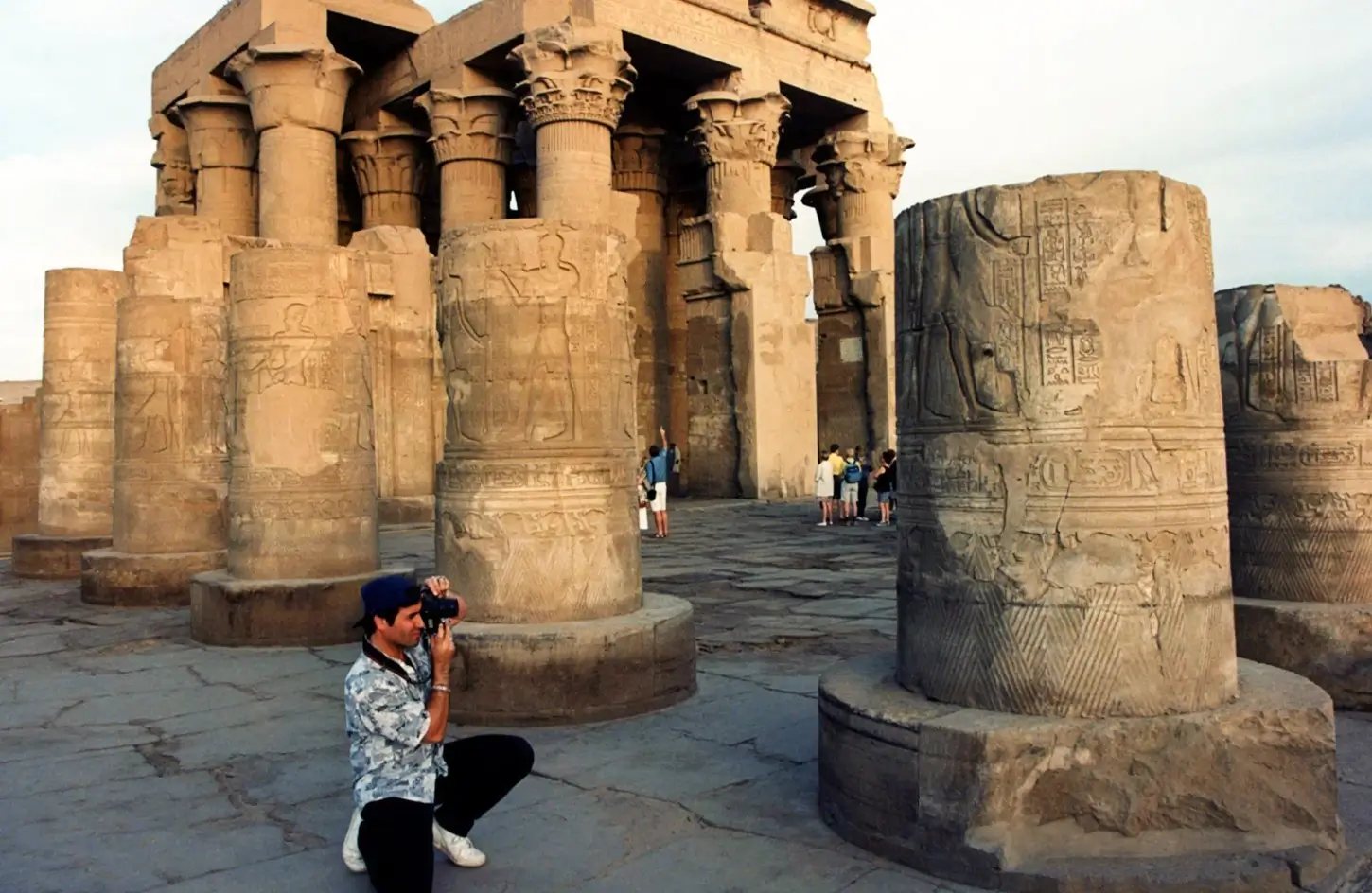
The twin temple, lit gold at sunset.
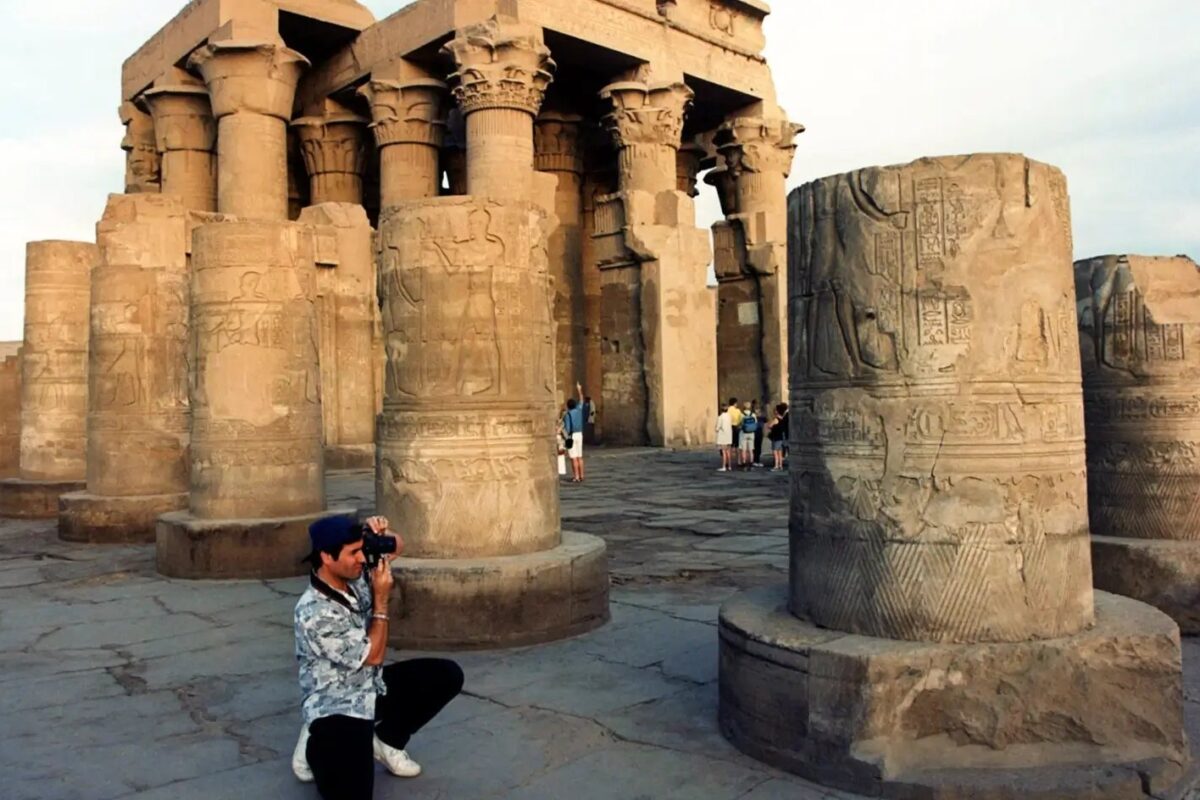
A temple with two of everything — two gods, two sanctuaries, two processional ways — set on a bend where the sunset hits the columns square. We arrive as the light turns and the day-boats leave.
Sobek the crocodile on one side, Horus the falcon on the other — perfectly mirrored.
Scalpels, forceps and bone saws carved in stone — antiquity's operating manual.
Sacred beasts of the temple lake, resting in the small museum beside it.
Kom Ombo is a double temple, and it is double in a way nothing else on the Nile is: two entrances, two hypostyle halls, two sanctuaries, perfectly mirrored along a central axis. The southern half belongs to Sobek, the crocodile god; the northern half to Haroeris, Horus the Elder. Neither side borrows from the other. A priest of Sobek and a priest of Haroeris could walk in side by side and never cross.
The site sits on a bend above the river, higher than the surrounding fields, which is why the approach from the water is the one that was intended. The temple is Ptolemaic, begun in the second century BC, with Roman additions. Part of it has fallen into the Nile — the forecourt is gone, and the river has taken the eastern corner — but the symmetry survives clearly enough to read.
On one wall is the relief that gets photographed more than any other here: a set of surgical and medical instruments — forceps, scalpels, scales, a birthing chair — carved as an offering. Whether Kom Ombo was a healing sanctuary or whether the relief lists a donation is argued over. The stretch of wall beside it carries a calendar of the temple's festivals.
The crocodile museum next door holds some three hundred mummified crocodiles recovered from a nearby necropolis, laid out as they were found. Sobek was fed, housed and buried with honours here for centuries; the museum is the evidence.
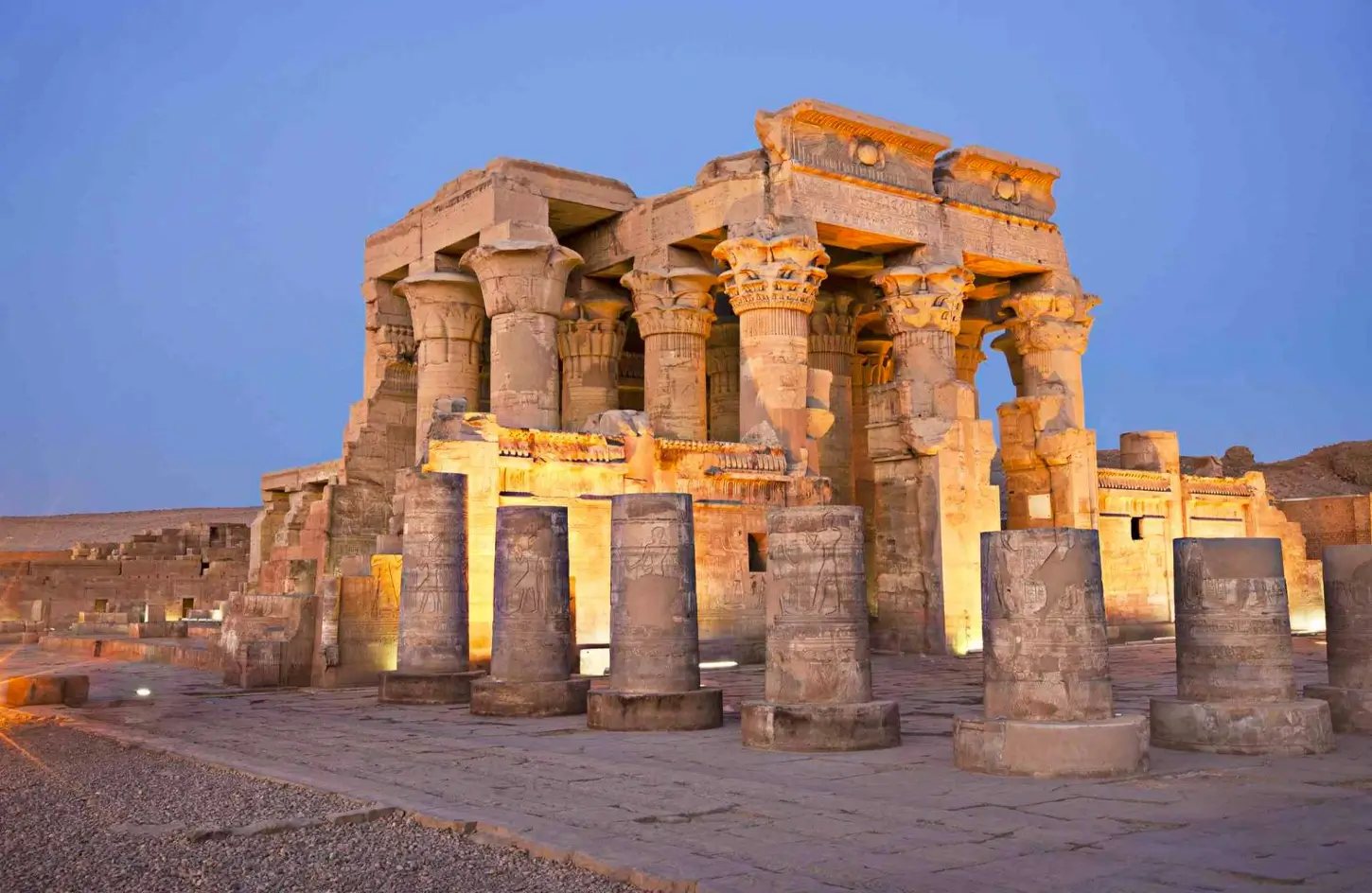
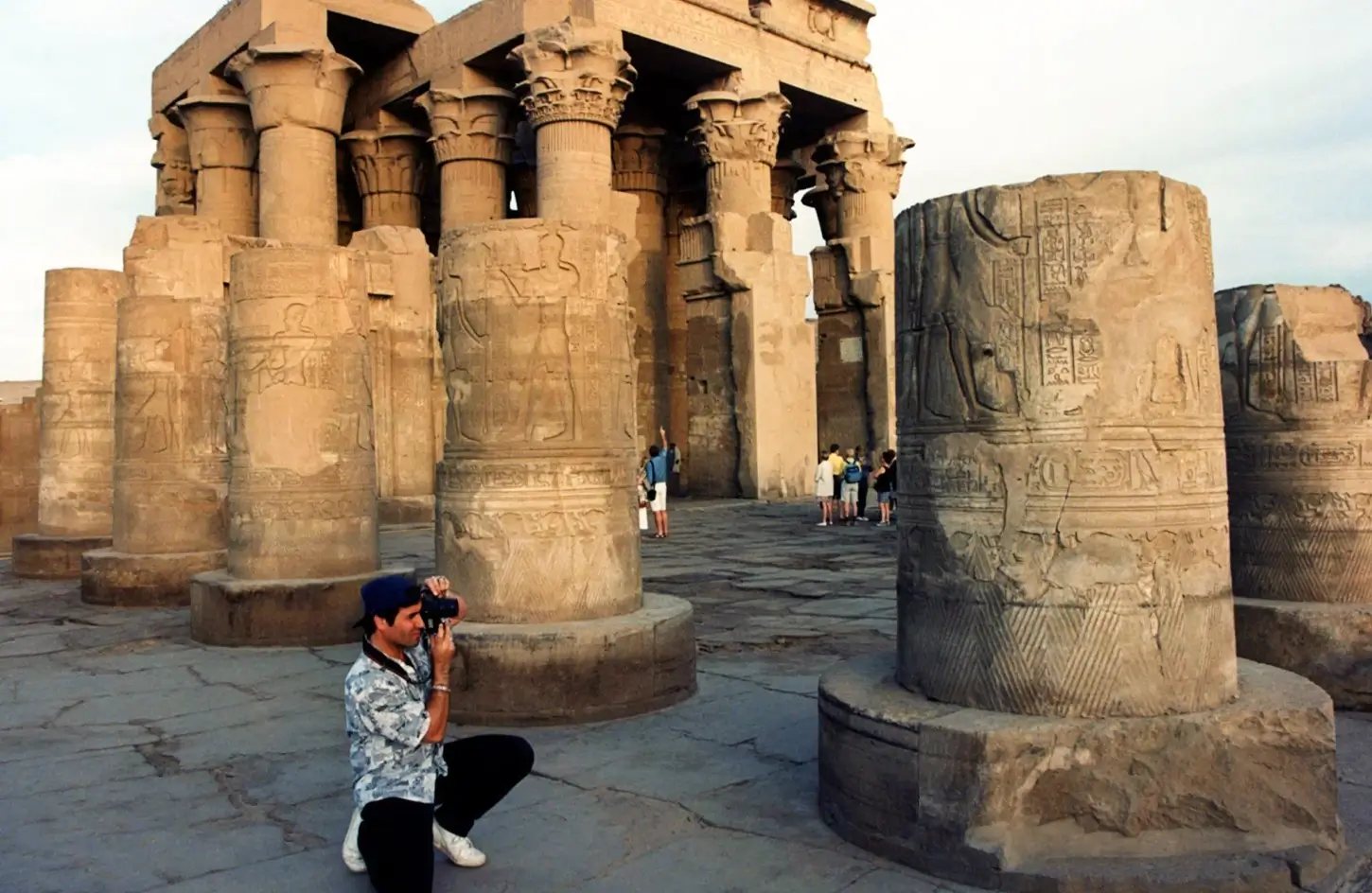
We moor directly below the temple for golden hour, walk up as the coaches pull away, and dine on deck beneath its lit columns.