
Philae by launch
Isis's island temple, rescued stone by stone from the rising lake — arrive across the water at opening.
Granite islands, black water, journey's end.
The river changes character at Aswan — granite instead of sandstone, Nubia instead of Egypt, islands scattered across black water. Philae waits on its own island, reached the only way it should be: by boat.
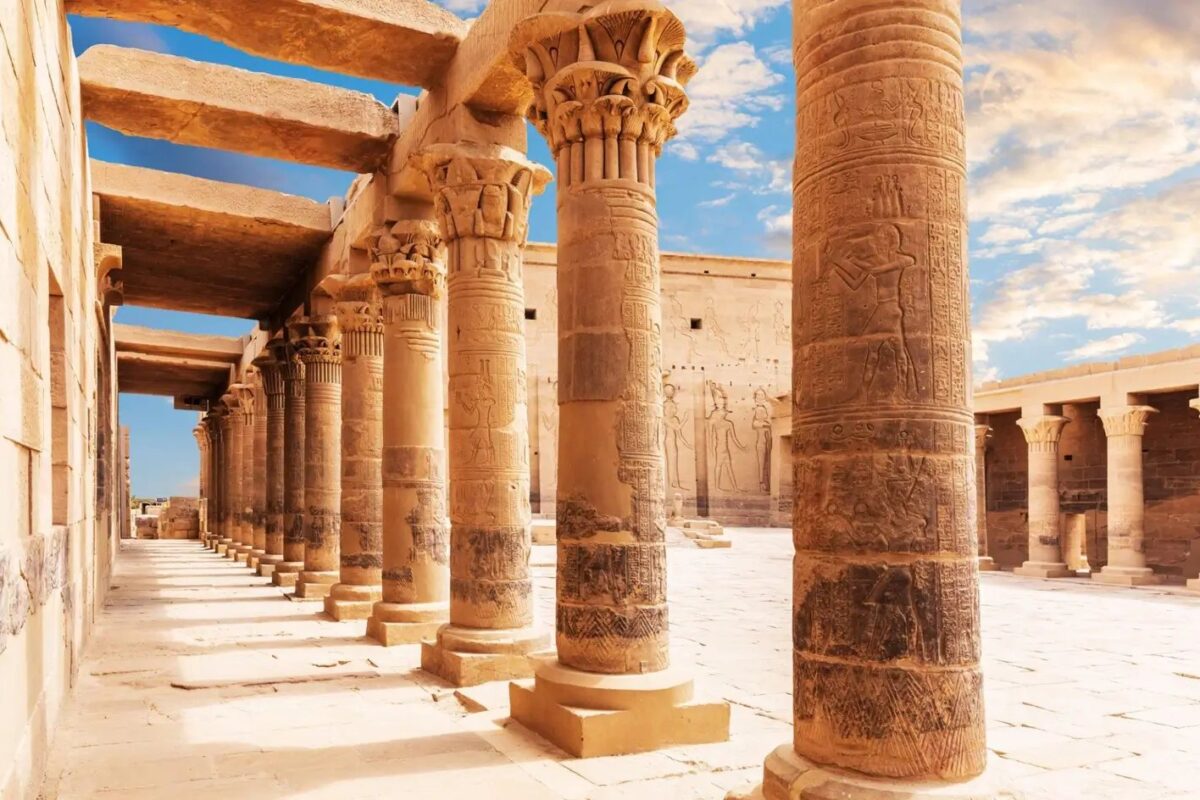
Isis's island temple, rescued stone by stone from the rising lake — arrive across the water at opening.
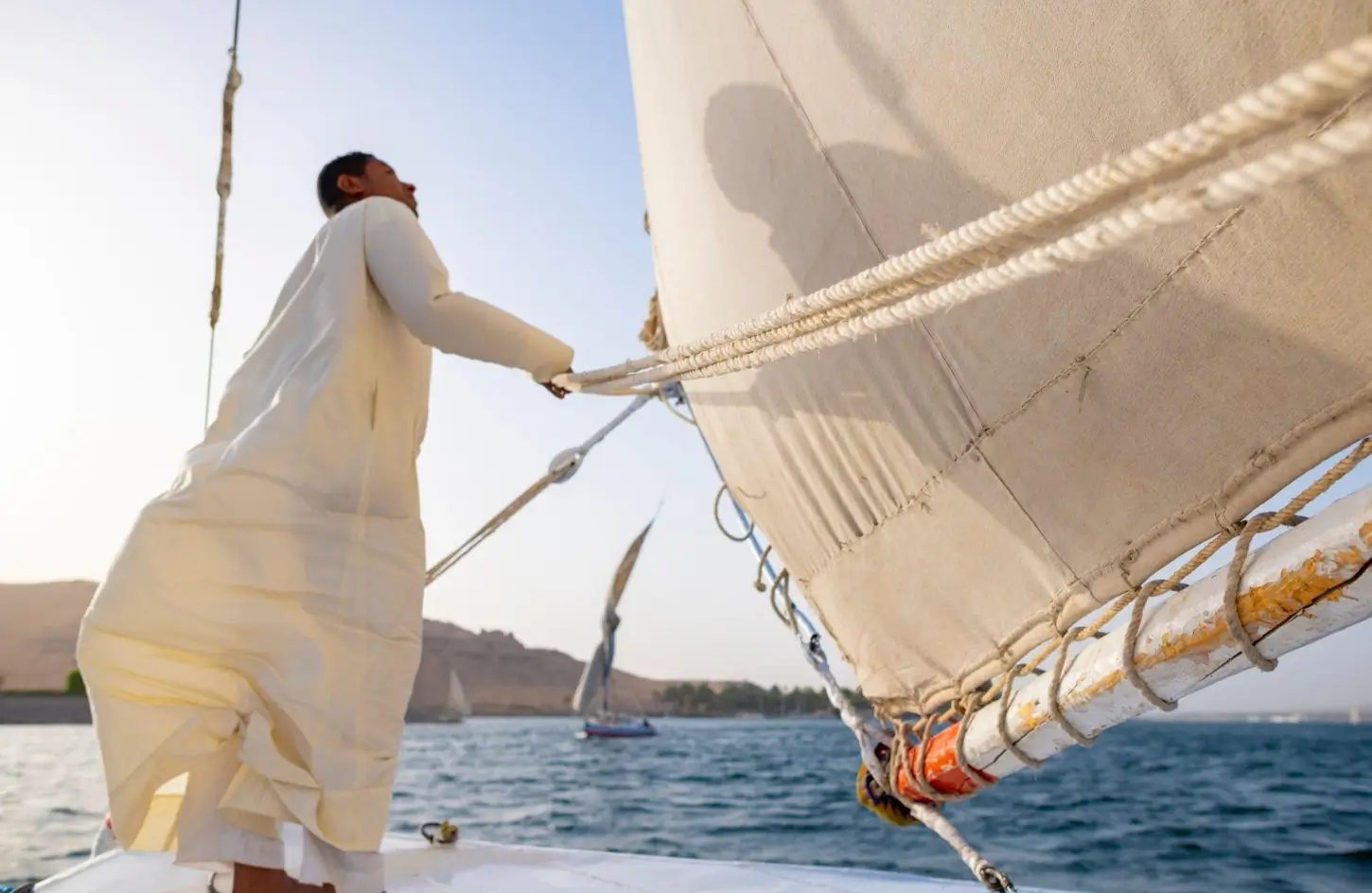
Where the Nile once broke white over granite; feluccas thread the islands now.
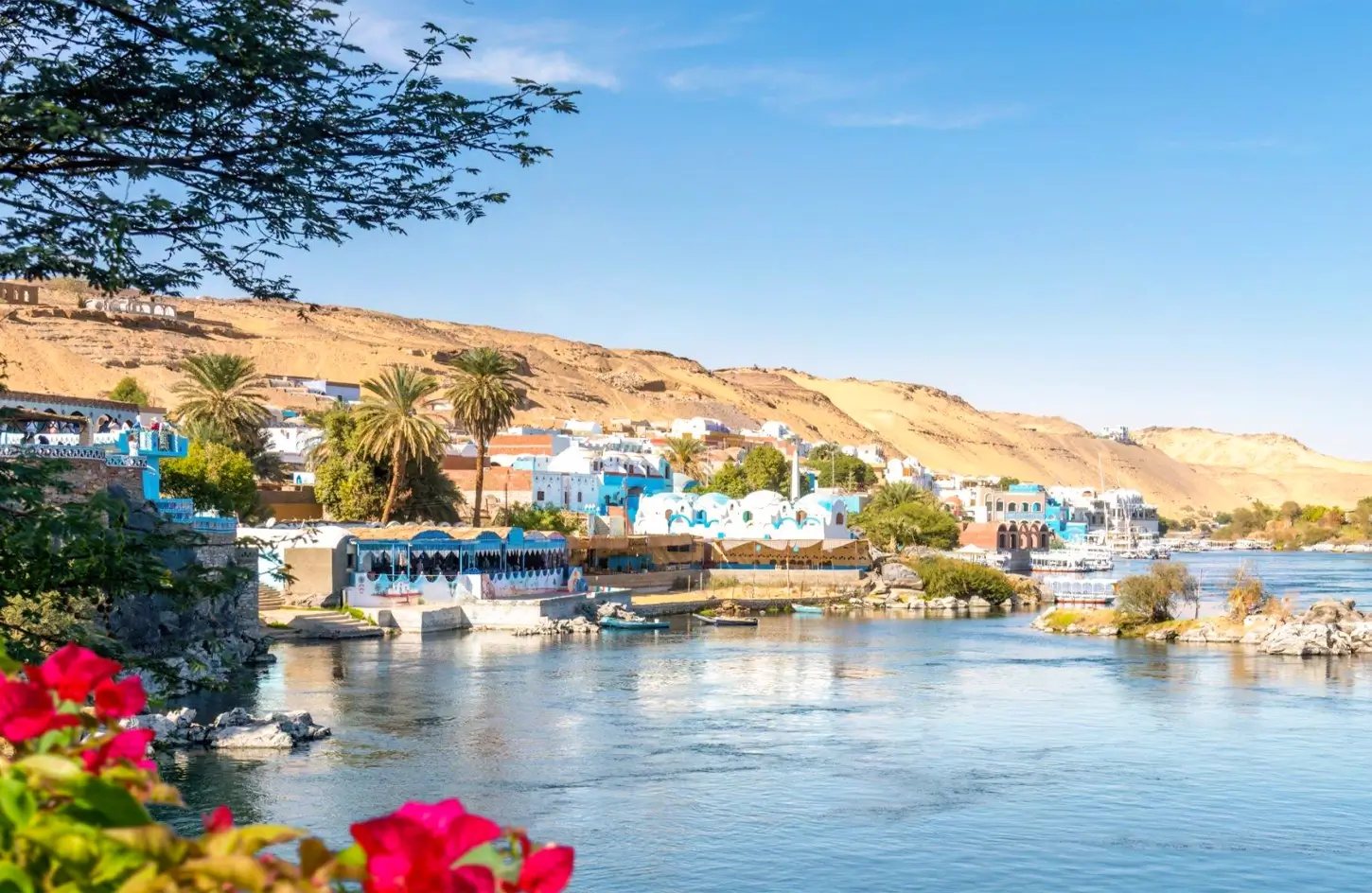
Painted houses, hibiscus tea and a slower Arabic on the west bank of the world's oldest border town.
Aswan was the frontier. South of the first cataract the Nile stops being navigable and Egypt stops being Egypt — beyond it was Nubia, and the trade in gold, ivory, ebony and incense that came north through this town for three thousand years. The ancient name, Swenett, is the root of the modern one, and the granite quarried here went into obelisks and colossi the length of the country.
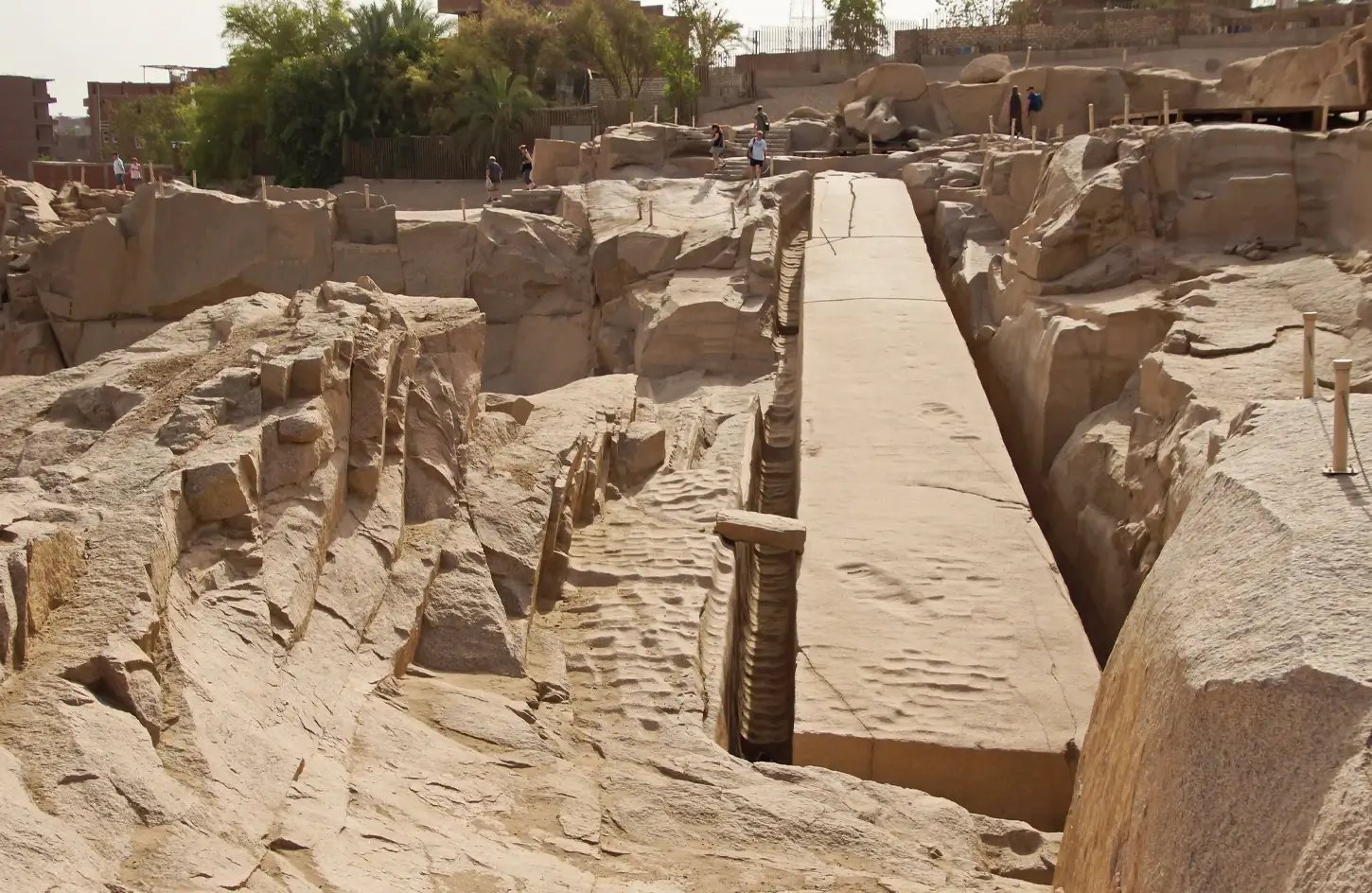
The unfinished obelisk still lies in its quarry, cracked and abandoned where it was being cut. Had it been raised it would have stood nearly forty-two metres and weighed over a thousand tonnes — larger than any obelisk ever erected. A flaw opened in the granite and the work stopped, which is why it is there: the only place you can see exactly how the cutting was done, at full scale, unfinished.
Philae is the reason most people come. The temple of Isis stood on an island that the first Aswan dam left half-submerged for most of the year; when the High Dam was planned it would have drowned entirely. Between 1972 and 1980 it was cut into forty thousand blocks, lifted, and rebuilt on Agilkia island, which was reshaped to match the original. It was the last place in the Roman empire where the old Egyptian religion was still practised — the final hieroglyphic inscription anywhere was carved here, in AD 394.
The river changes at Aswan. It widens, the granite breaks the surface in black islands, and feluccas work the wind between them. The west bank is desert within a few hundred metres of the water, and the Nubian villages along it are painted in colours that have nothing to do with the rest of Egypt.
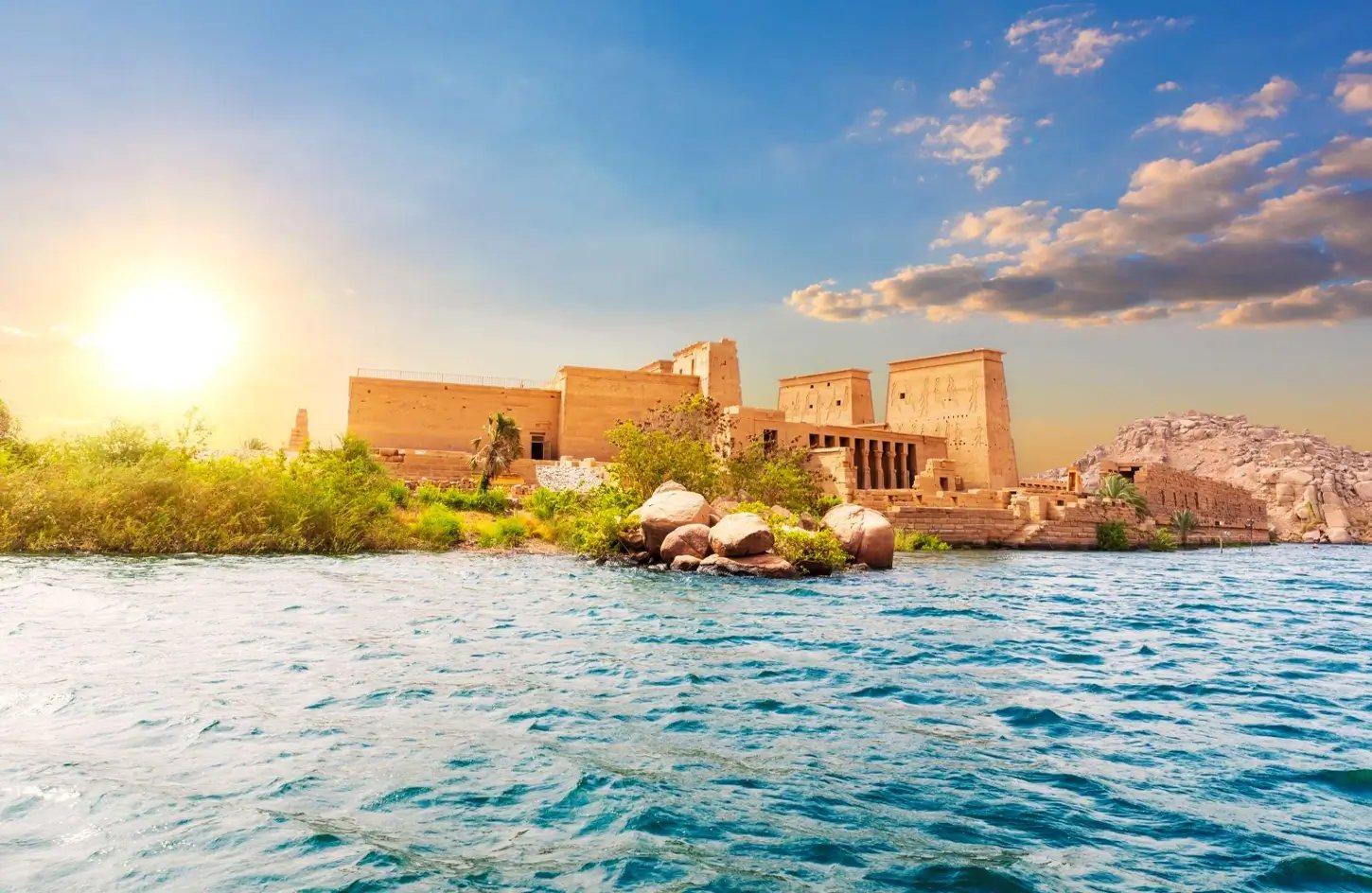
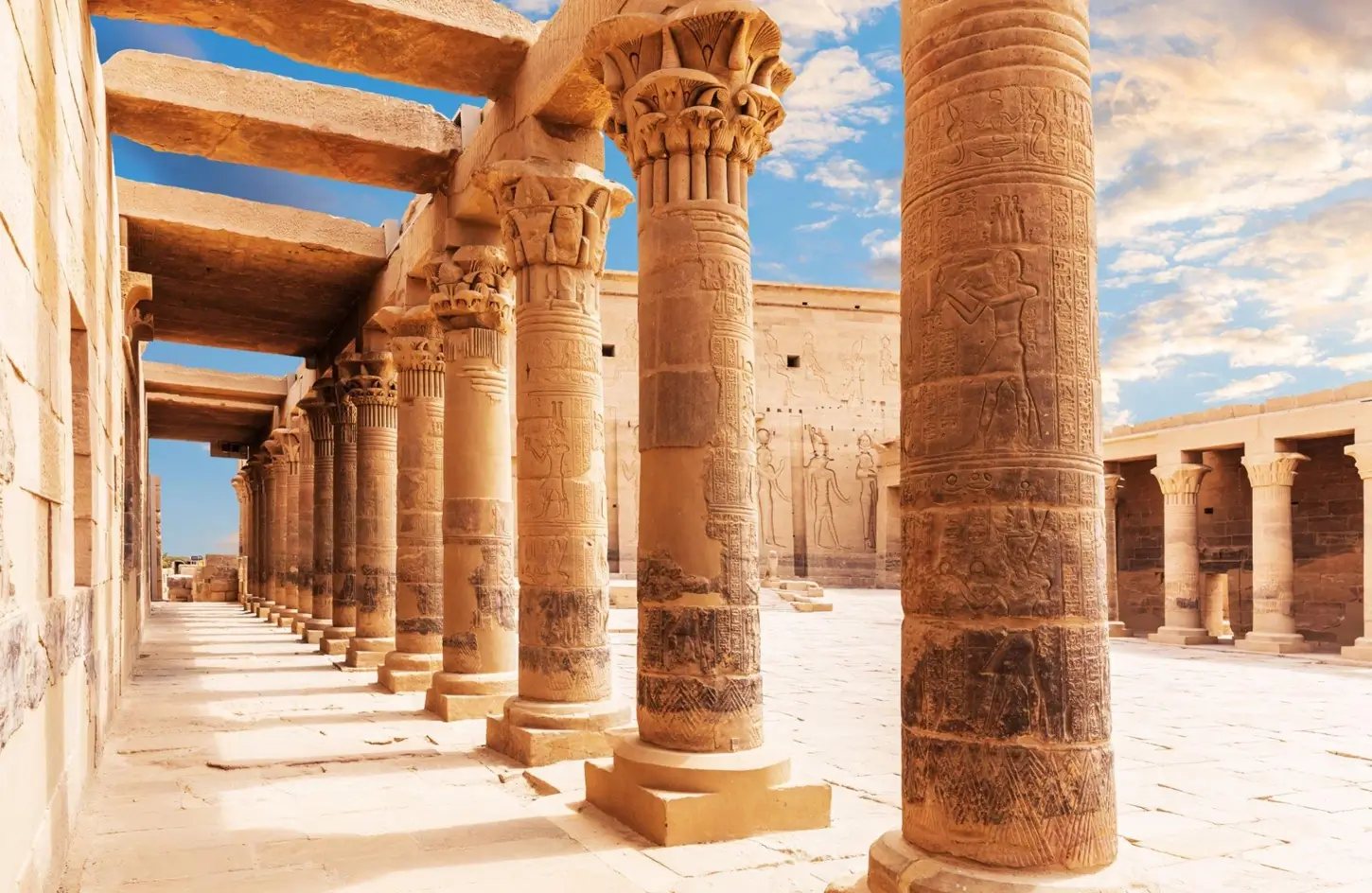
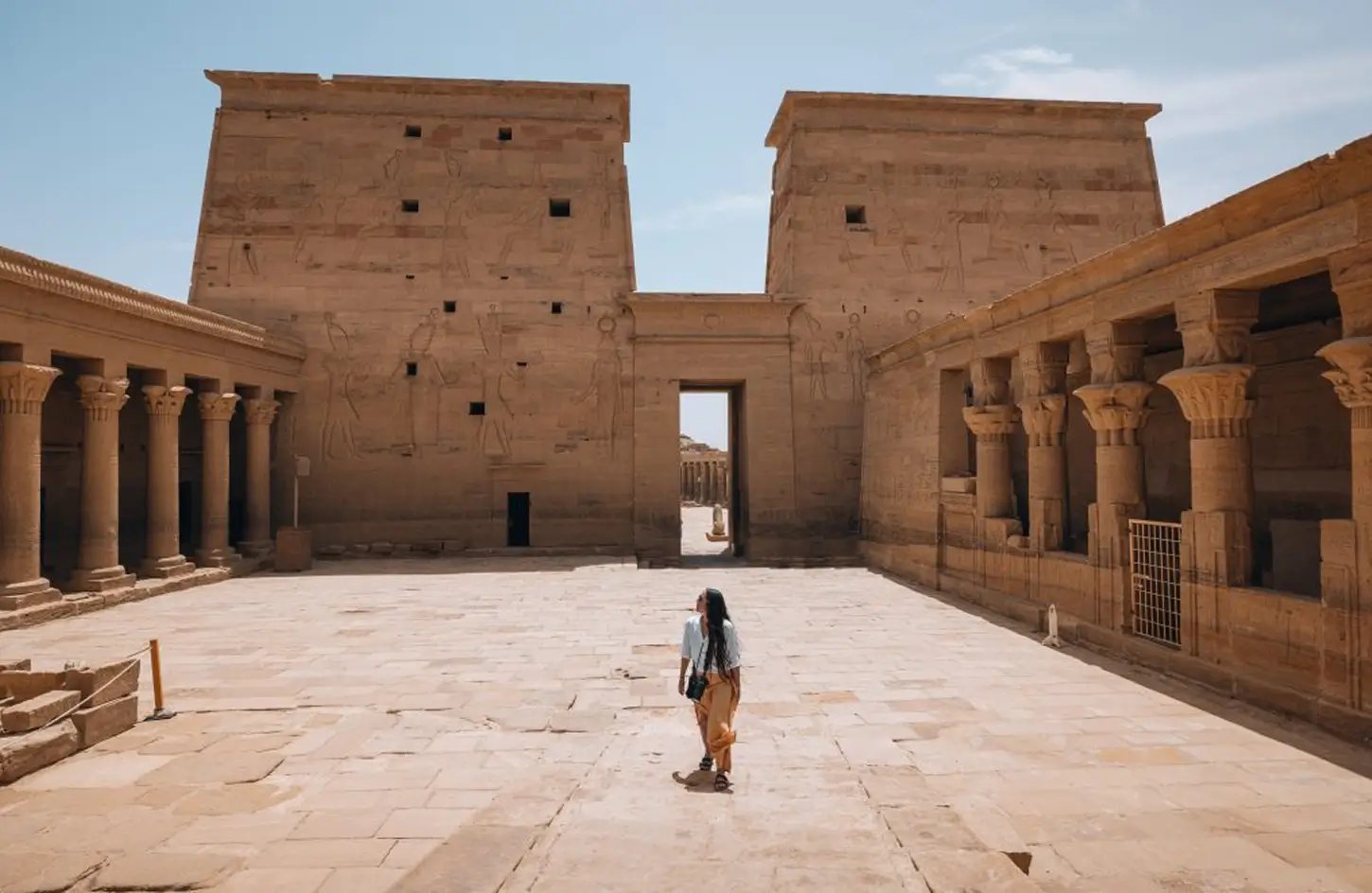
Our last morning: breakfast on deck among the islands, Philae by private launch, and your onward transfer arranged to the minute.