
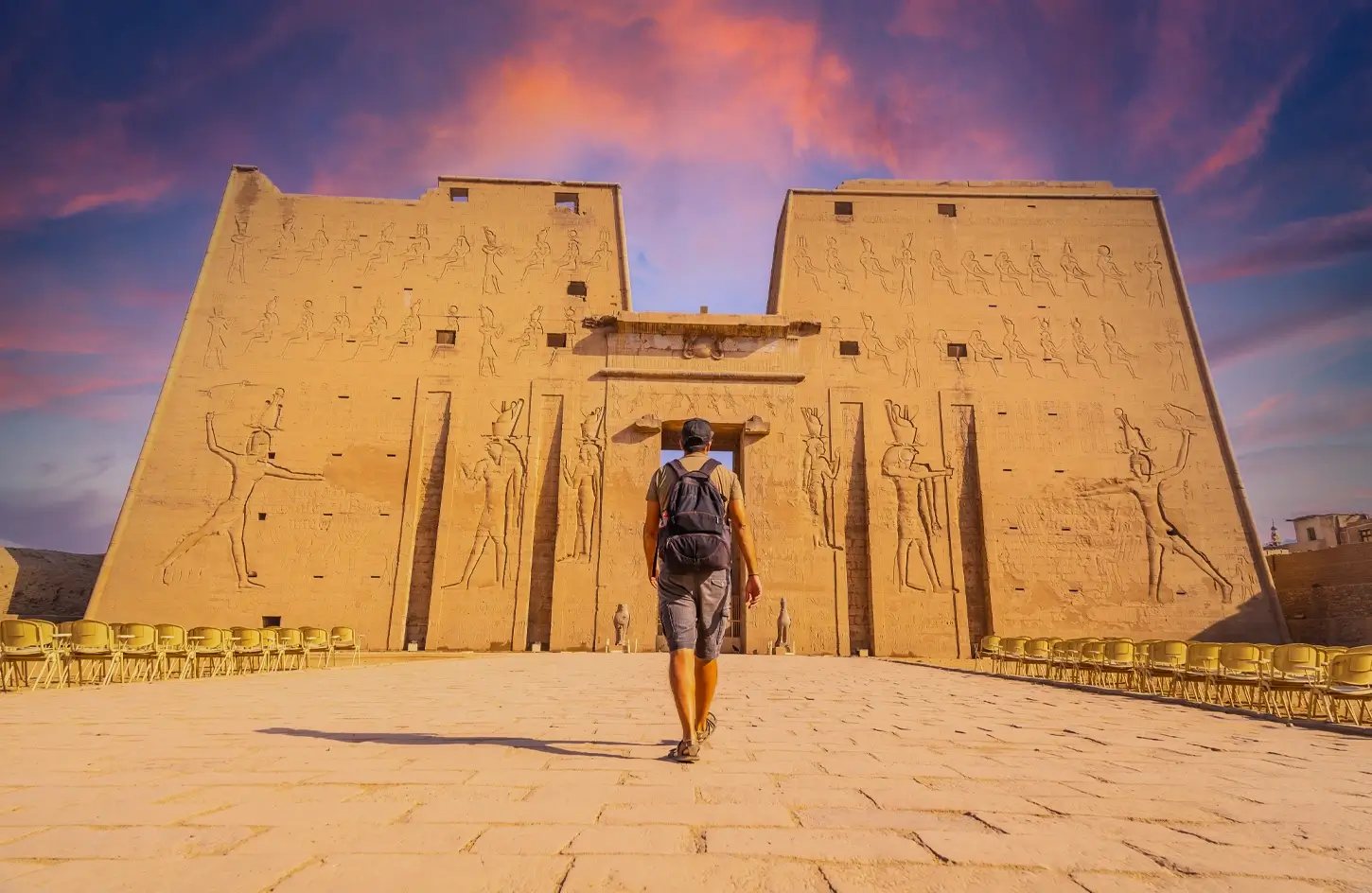
The great pylon
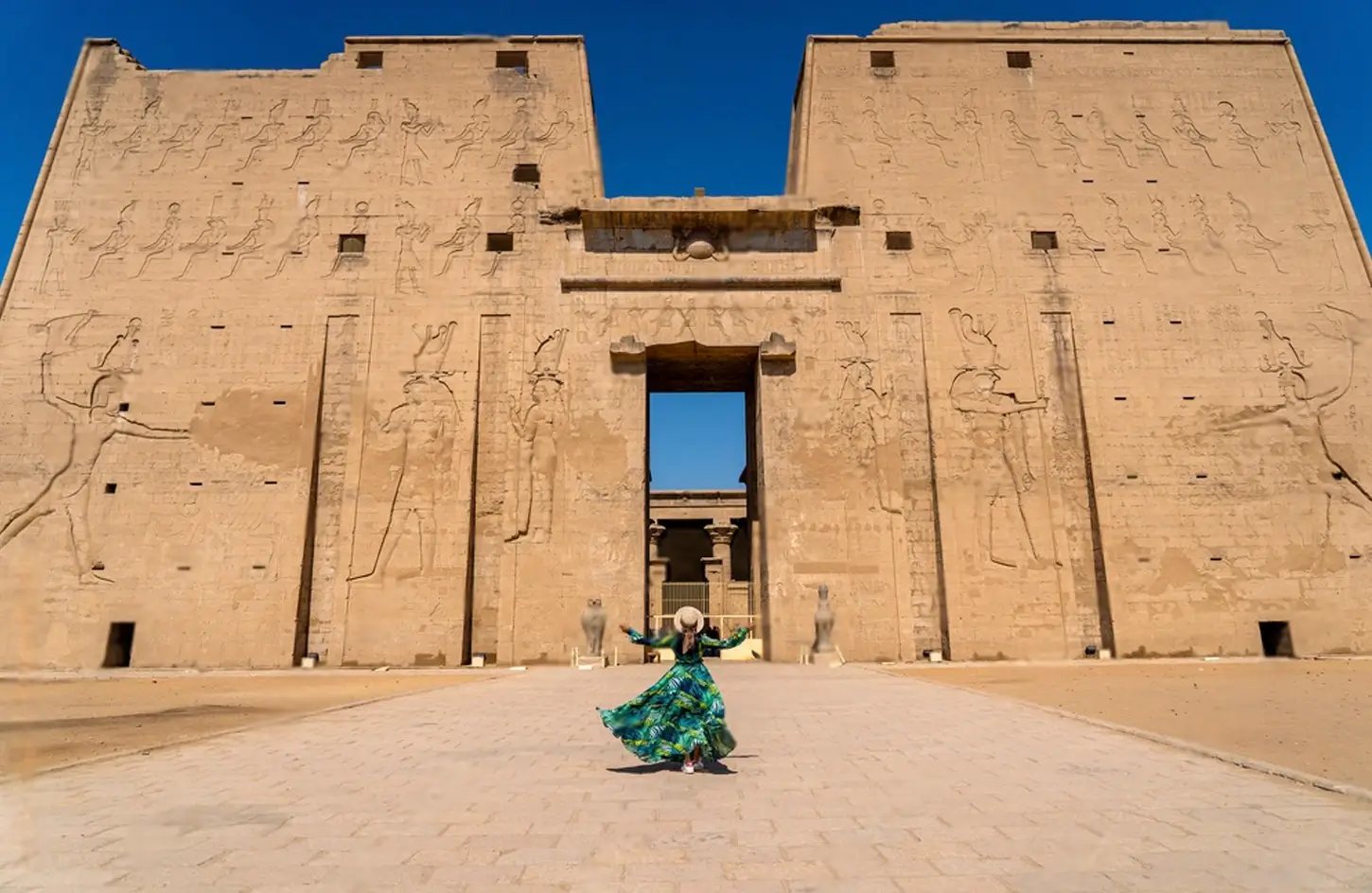
Thirty-six metres of carved gateway, the falcon god twice your height at the door.
The best-preserved temple on the Nile.
Two millennia old and almost intact — roof, halls, staircases and all. The Temple of Horus at Edfu is the sanctuary every other ruin asks you to imagine; here you simply walk in.
Thirty-six metres of carved gateway, the falcon god twice your height at the door.
A granite shrine that still holds the god's barque pedestal, deep in lamplit halls.
Walls dense with myth — the battle of Horus and Seth told panel by panel.
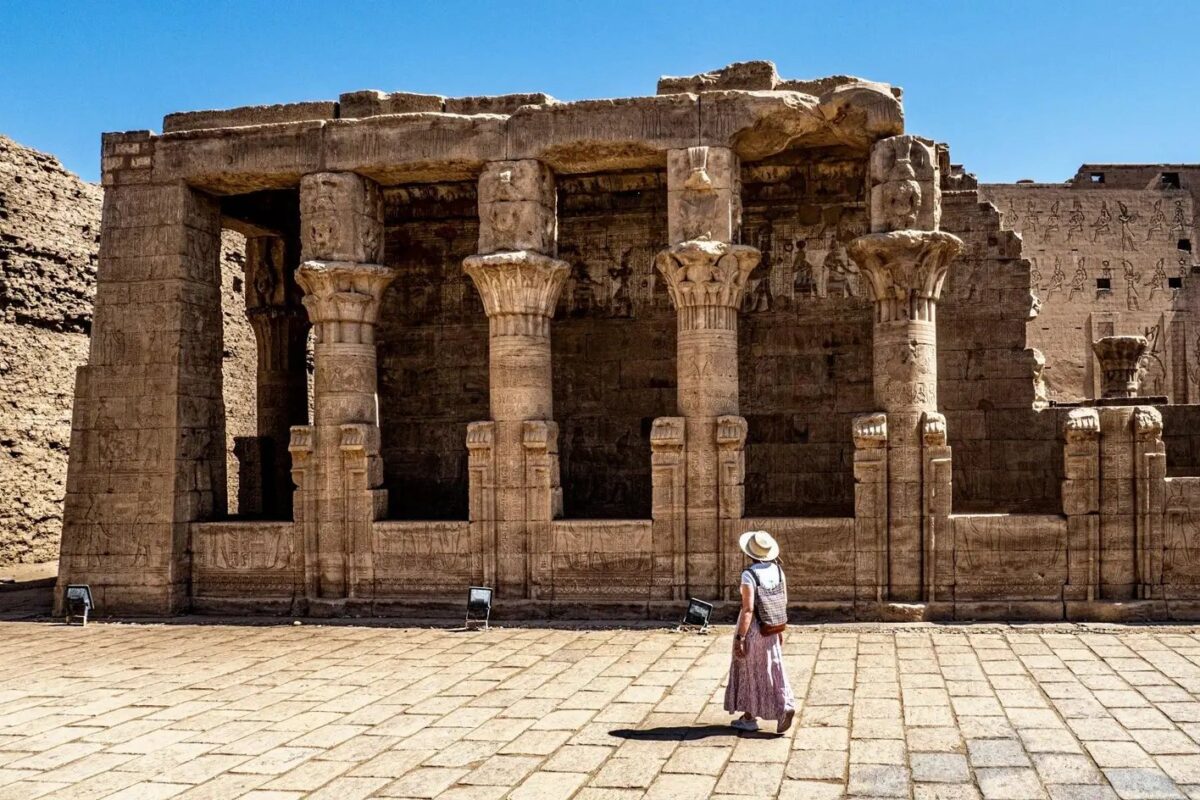
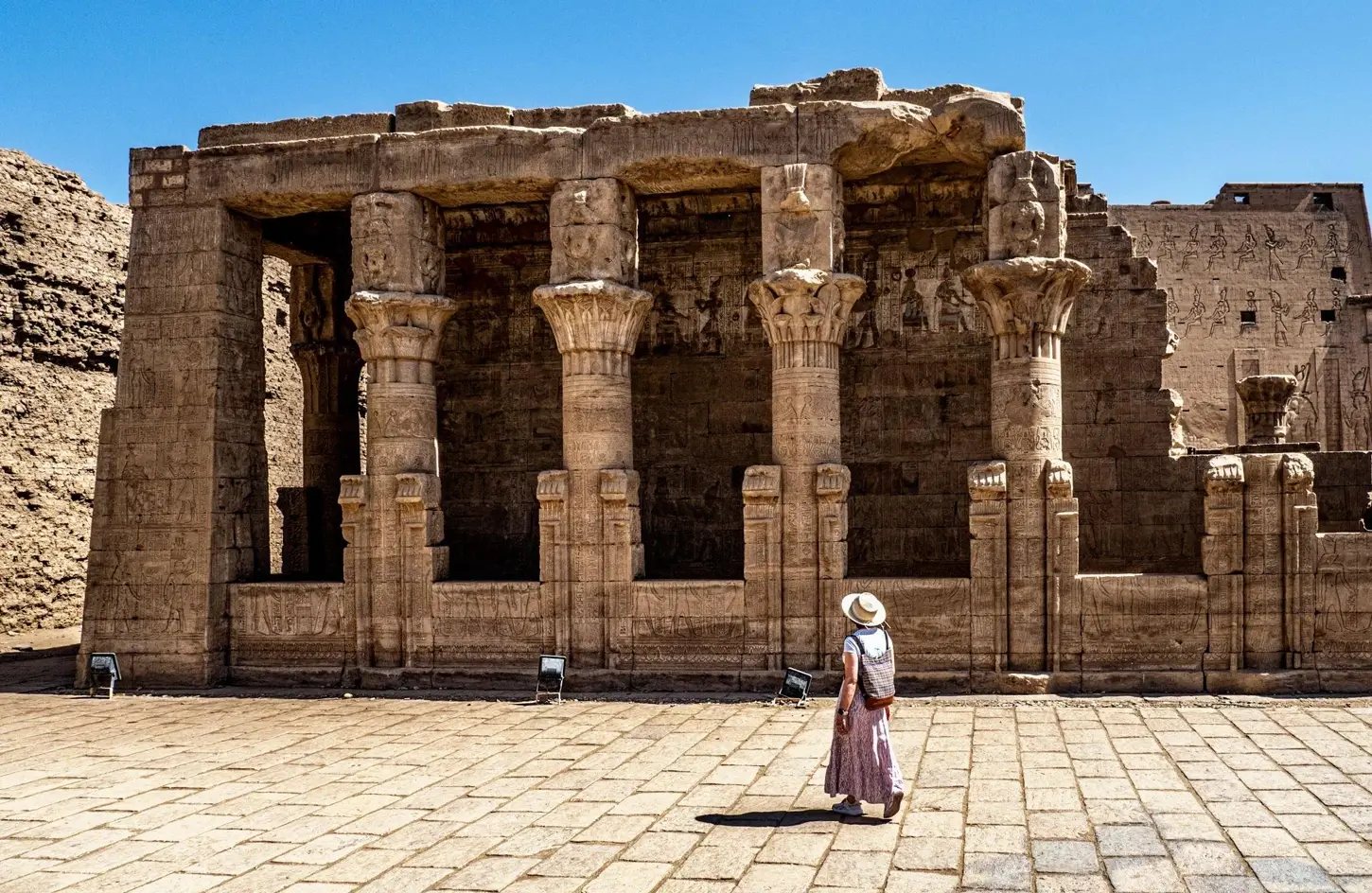
Every other temple on this river asks you to imagine a roof. Edfu does not. The temple of Horus was begun in 237 BC and finished a hundred and eighty years later, and it stands almost as it was built — pylon, courtyard, hypostyle halls, sanctuary, roof, and the staircases that lead up to it. You walk in rather than around.
It survived because it was buried. Sand and silt filled the courts, villagers built houses on top of the roof, and the whole thing vanished under a mound until Auguste Mariette cleared it in the 1860s. What was under the sand had been protected from weather, quarrying and iconoclasm for the better part of two thousand years. The paint is gone, but almost nothing else is.
The walls are dense with text — among the most complete temple inscriptions anywhere, including the full ritual calendar and the myth of the conflict between Horus and Seth set out panel by panel, with stage directions. Egyptologists read Edfu to understand what happened inside temples they can no longer enter. The granite shrine in the sanctuary, carved from a single block, still holds the pedestal the sacred barque stood on.
At the gate are two black granite falcons, and in the court a Nilometer — a stair down to the water table, used to measure the flood and, from it, to set the year's taxes. The temple was an administrative instrument as much as a religious one.
We time Edfu against the cruise-ship schedule — arriving by calèche at opening hour or in the last soft light, when the halls are nearly empty.