
The restored ceiling
A zodiac in original colour, cleaned in 2023 after centuries of soot — many call it the finest ceiling on the Nile.
Through the lock, into a slower river.
Nine metres below street level, the Temple of Khnum hides in a pit at the heart of a market town — its astronomical ceiling newly restored to reds and golds that look painted yesterday.
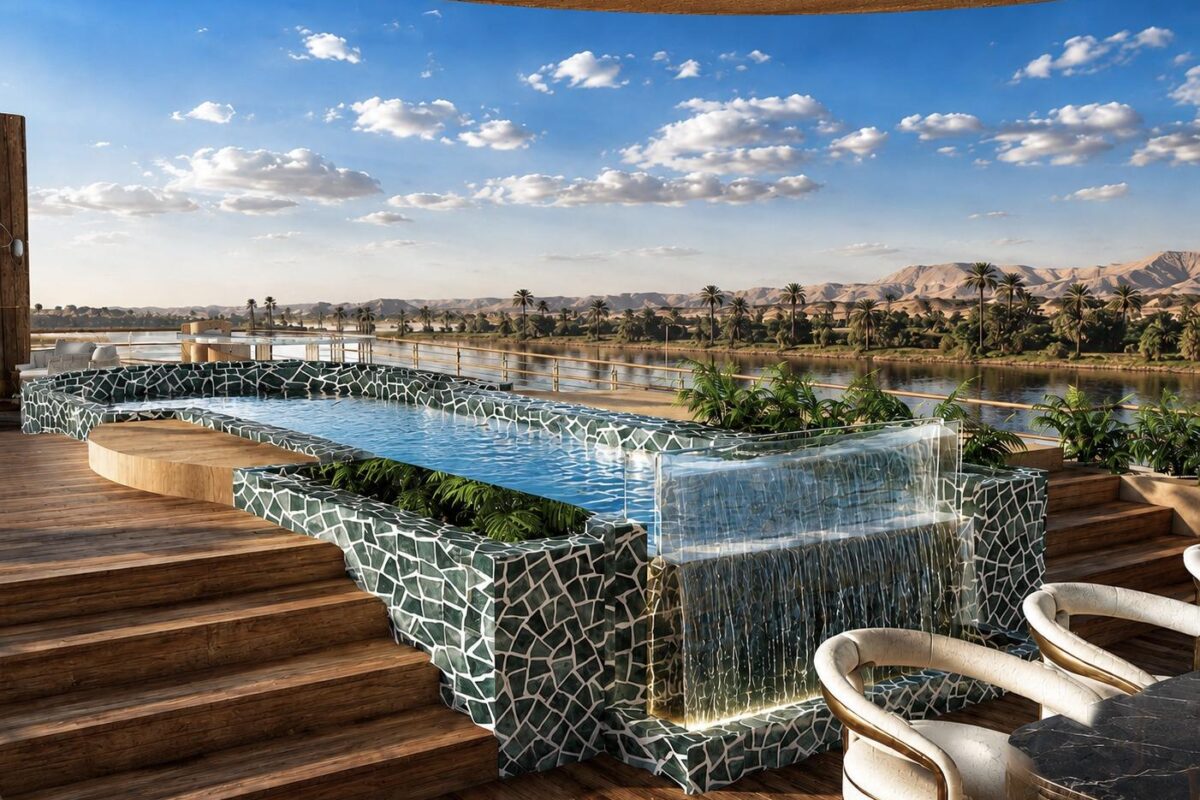
A zodiac in original colour, cleaned in 2023 after centuries of soot — many call it the finest ceiling on the Nile.
Wall texts to the ram-headed god who shaped mankind on his potter's wheel.
Spices, fabrics and river trade in the lanes over the temple — a town, not a stage set.
Esna is where the dahabiya moors, and where most of our southbound journeys begin — but it is worth seeing in its own right, and almost nobody does. The temple of Khnum sits in a pit in the middle of the modern town, nine metres below street level, because the town kept being rebuilt on its own rubble for two thousand years while the temple stayed where it was.
What survives is the hypostyle hall: twenty-four columns, each with a different capital — palm, lotus, papyrus, composite — and a ceiling that was, until recently, black. A German-Egyptian conservation project spent years removing the soot of centuries, and what came out from under it was astronomical: zodiacs, constellations, the sky as Egypt understood it, in colour that had been sealed under the grime rather than destroyed by it. Work is ongoing, and the ceiling now looks more as it did when it was painted than at any point since.
The temple is late — Ptolemaic and Roman, finished under emperors whose cartouches are carved in hieroglyphs they could not read. Khnum, the ram-headed god who shaped mankind on a potter's wheel, was the local deity. It is the smallest of the temples on this route, and the only one you reach by walking down into a town rather than up to a ruin.
Above the town is the Esna lock, which is why boats gather here. Traffic through it sets the rhythm of the river: dahabiyas wait their turn alongside working barges, and the hour spent waiting is one of the better hours of a journey — close enough to the bank to hear the town.
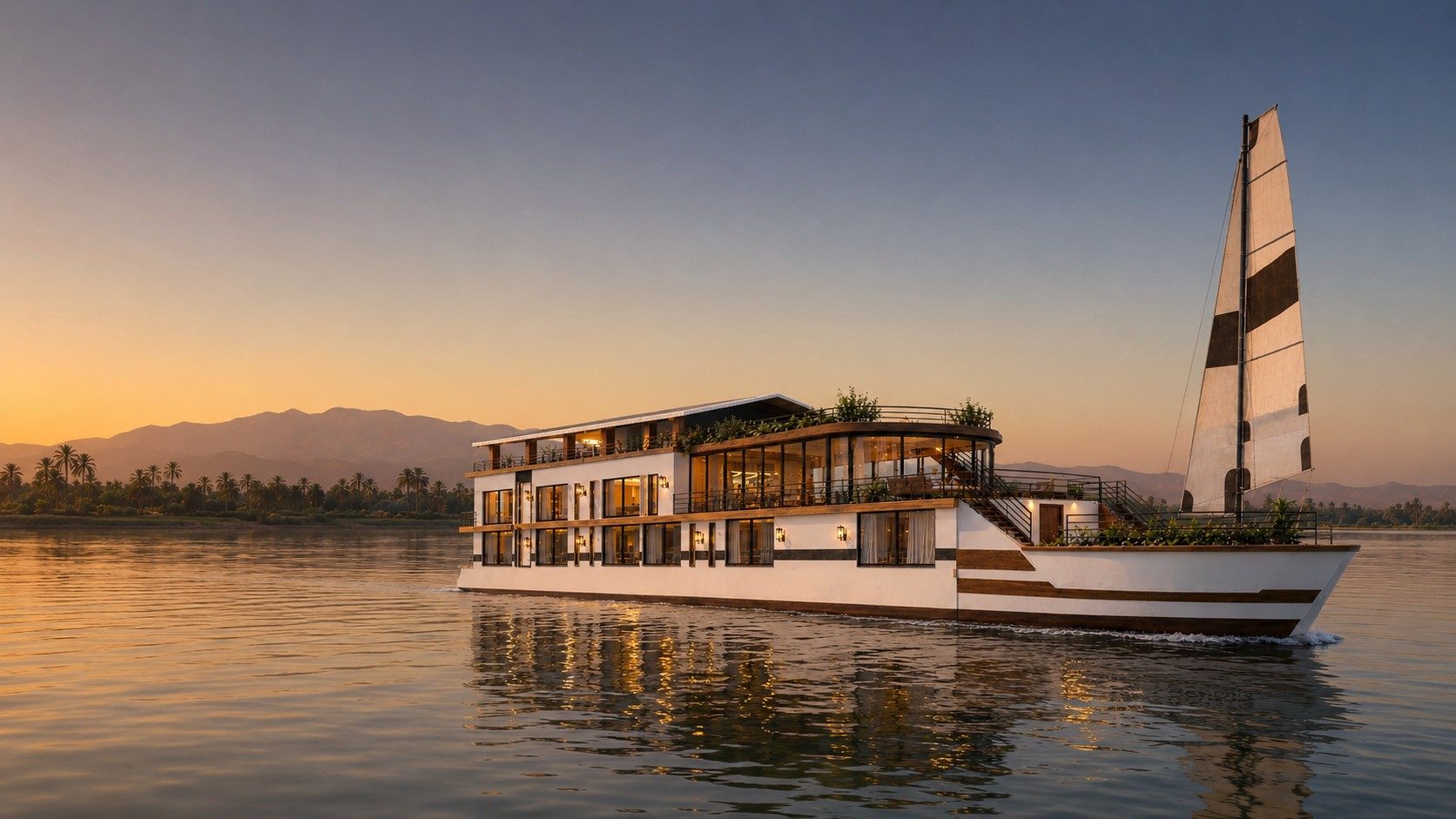

Esna is our home port. We moor beside the town, walk down to the temple as the afternoon cools, and raise the sail before dinner.