
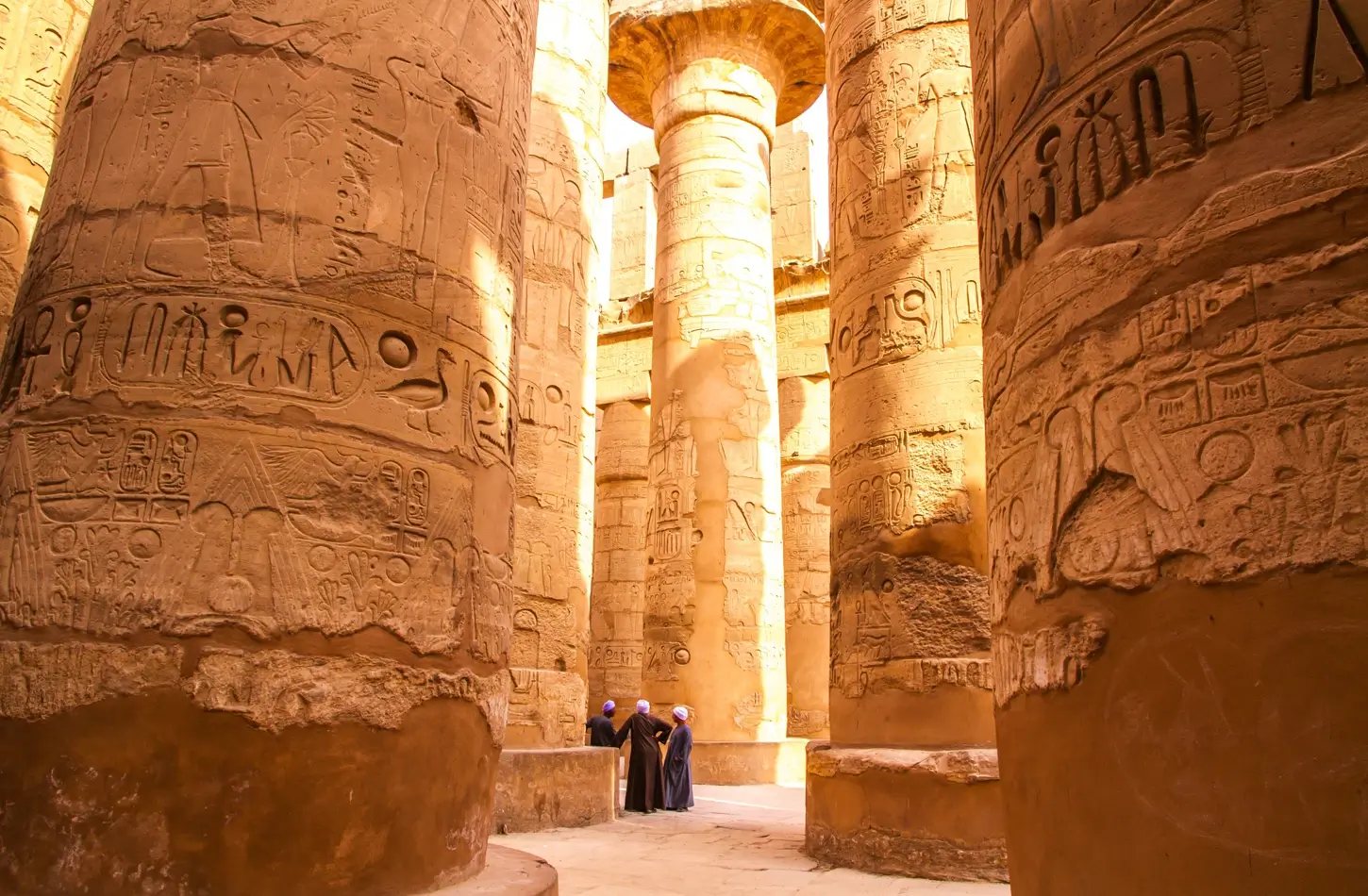
Karnak's hypostyle hall
One hundred and thirty-four columns, each one a forest trunk in stone — walk it before the tour buses arrive.
Where the journey begins.
Ancient Thebes — the greatest open-air museum on earth. Before we cast off, a morning among the colossi of Karnak and the painted tombs of the West Bank sets the scale of everything the river will show you.
One hundred and thirty-four columns, each one a forest trunk in stone — walk it before the tour buses arrive.
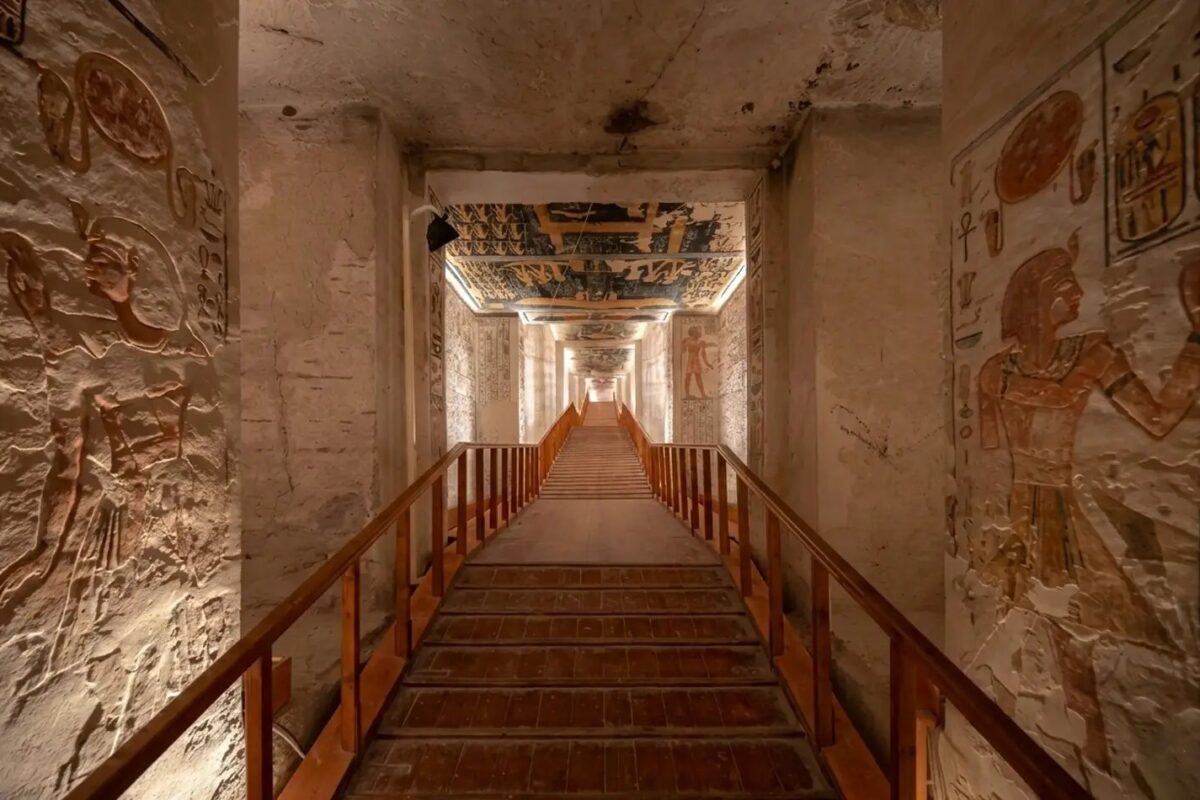
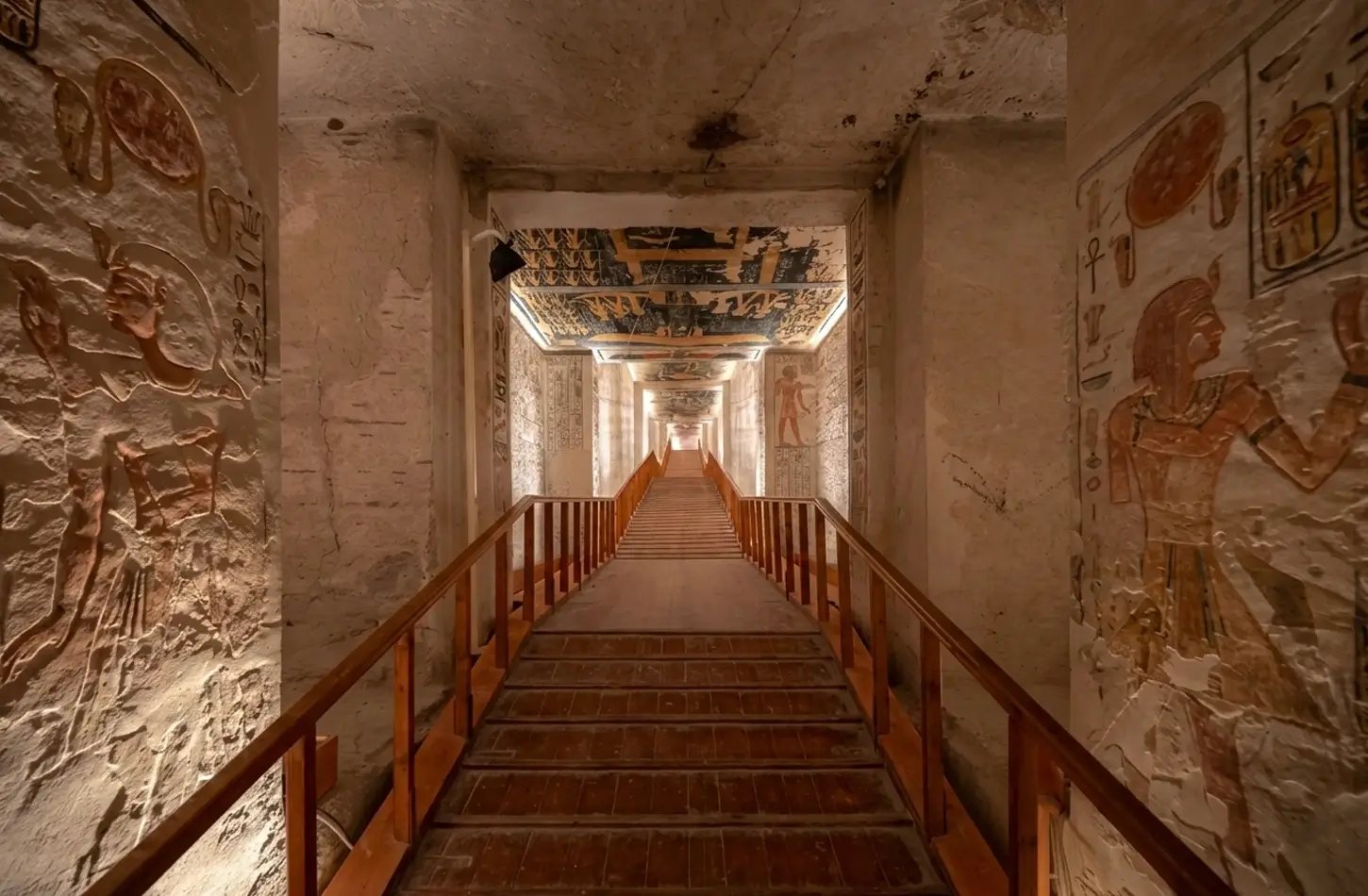
Painted burial chambers whose colours have not faded in three thousand years.
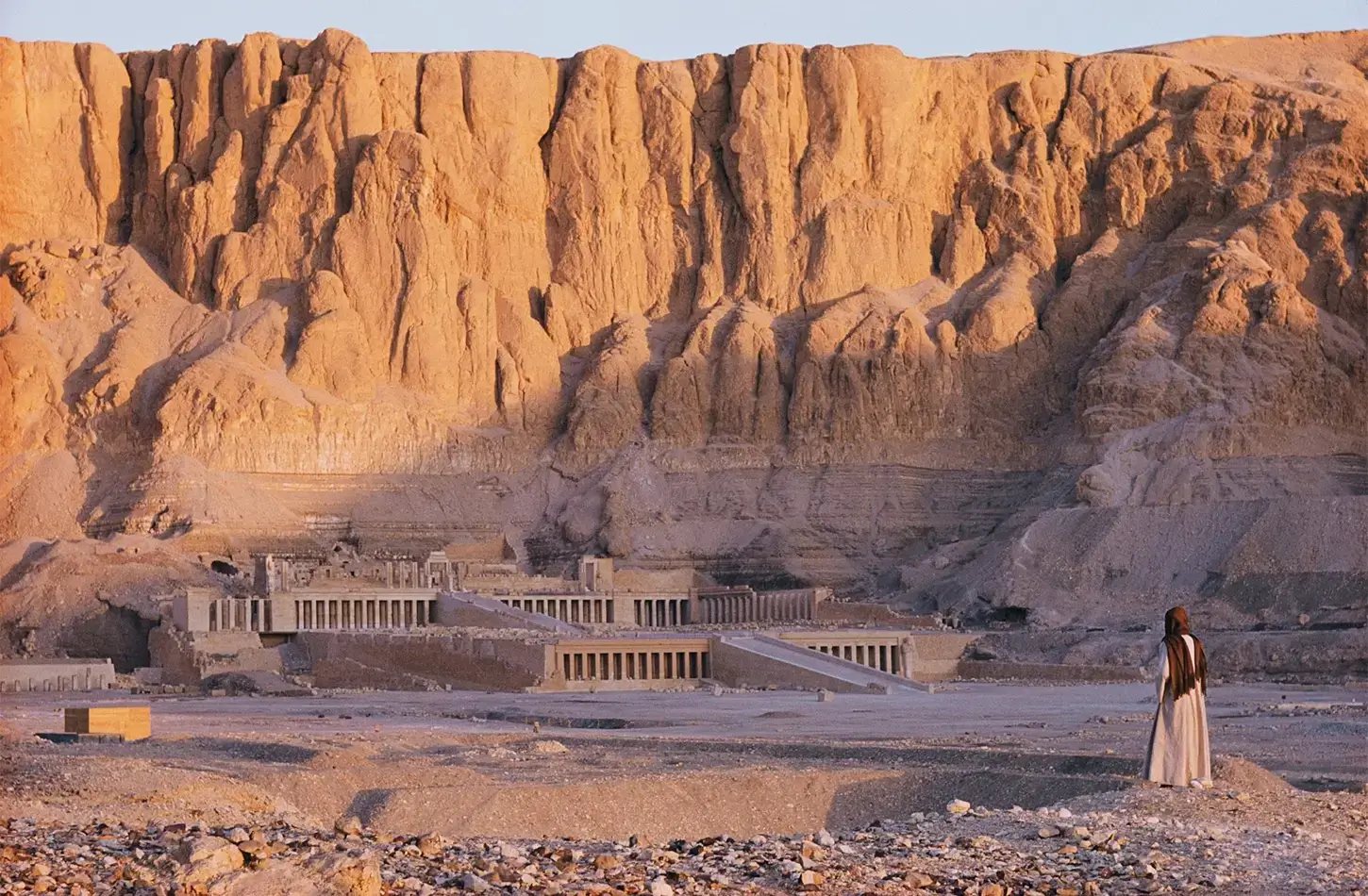
The mortuary temple of Egypt's great female pharaoh, set against a wall of golden cliff.
For five hundred years Luxor was Thebes, and Thebes was Egypt. The capital of the New Kingdom sat on both banks: the living on the east, where the sun rose over Karnak and the Luxor temple, and the dead on the west, where the kings cut their tombs into a valley chosen because a natural pyramid of rock stands above it. That division is not a metaphor the guidebooks invented. It is how the city was planned.
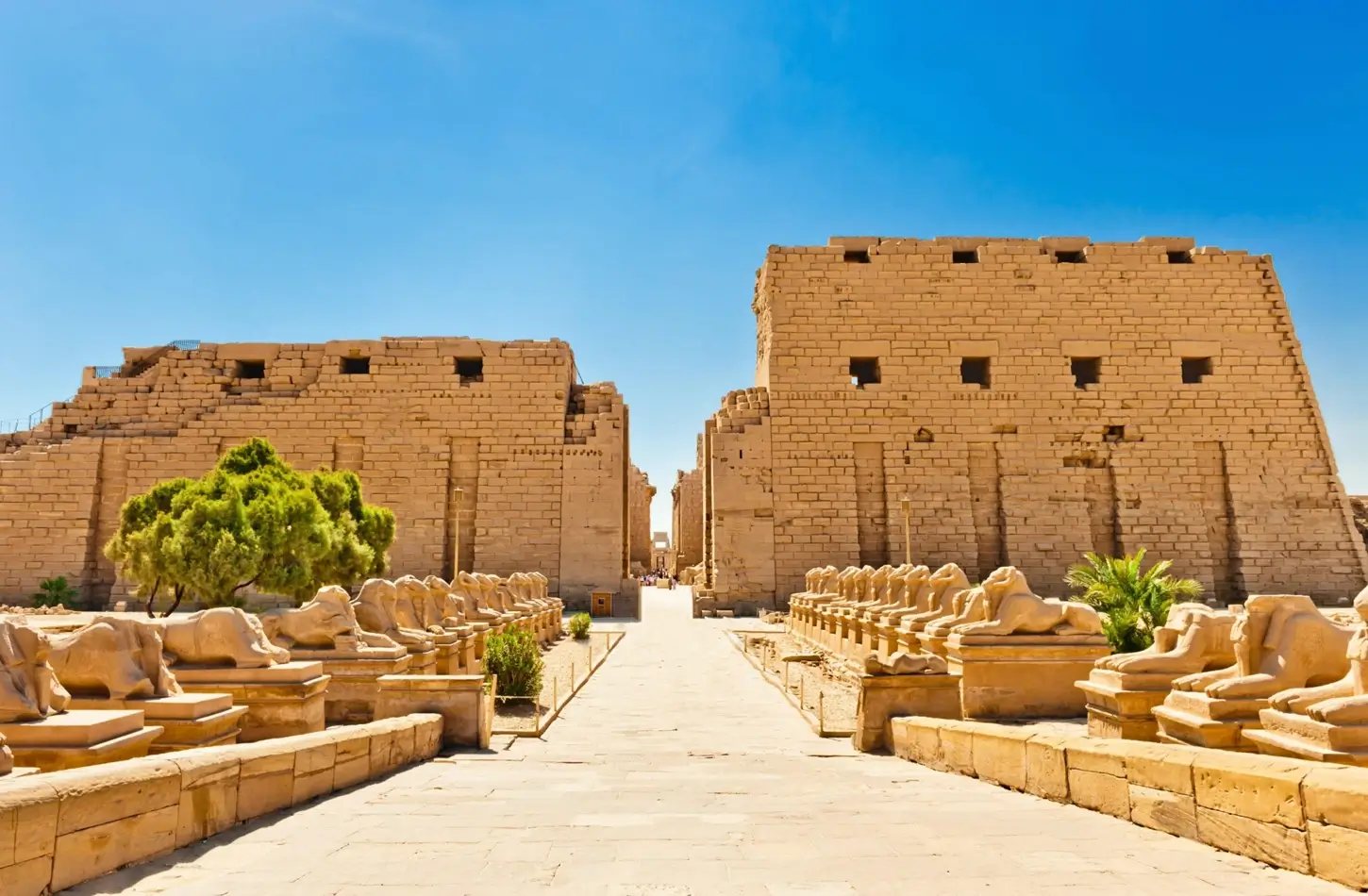
Karnak was built, demolished and rebuilt by about thirty pharaohs across two thousand years, which is why nothing about it is consistent and everything about it is enormous. The hypostyle hall alone holds one hundred and thirty-four columns; the tallest are twenty-one metres and were once painted. Walking it is less like visiting a building than standing in a stone forest that someone has carved from floor to capital.
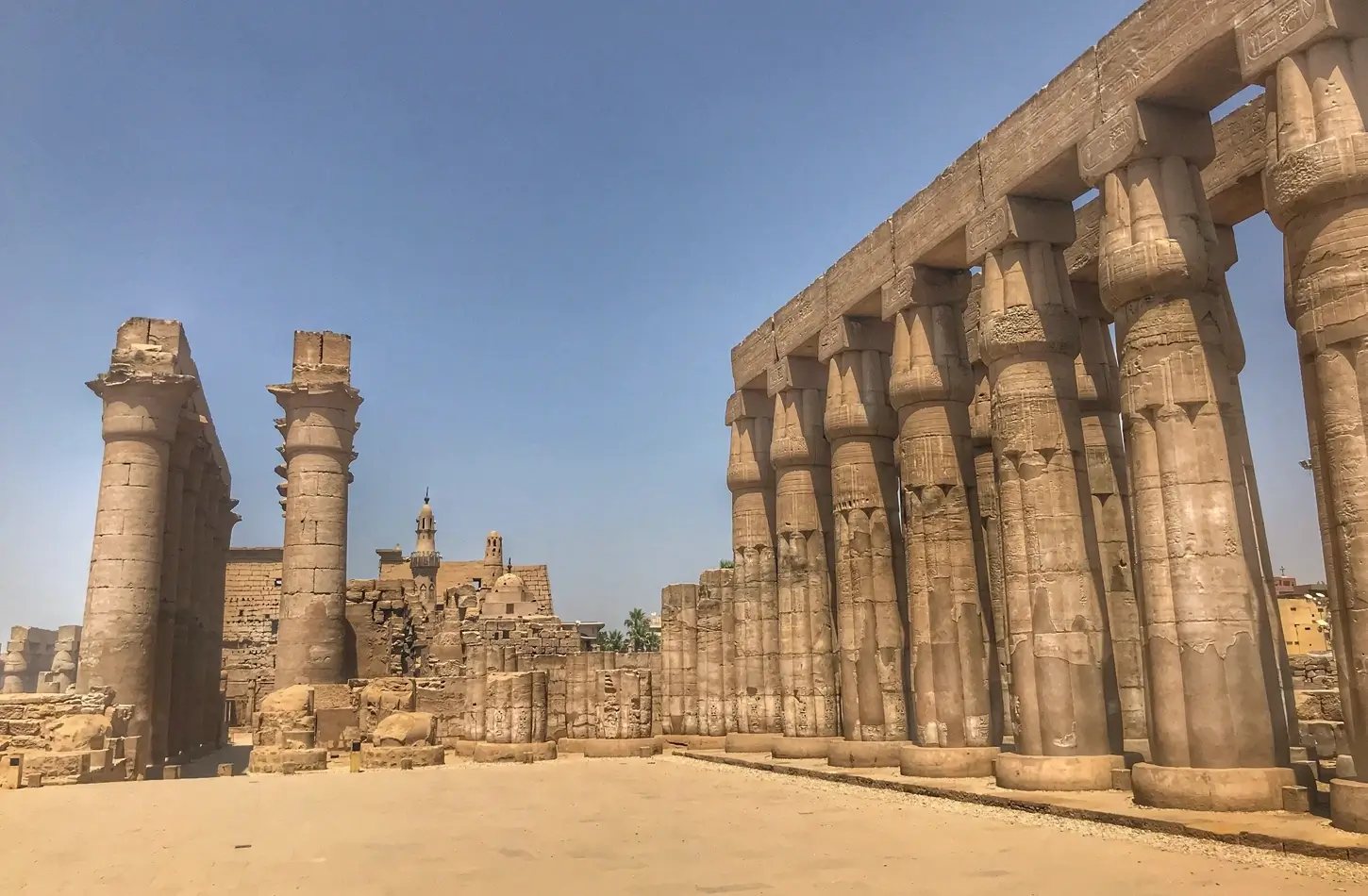
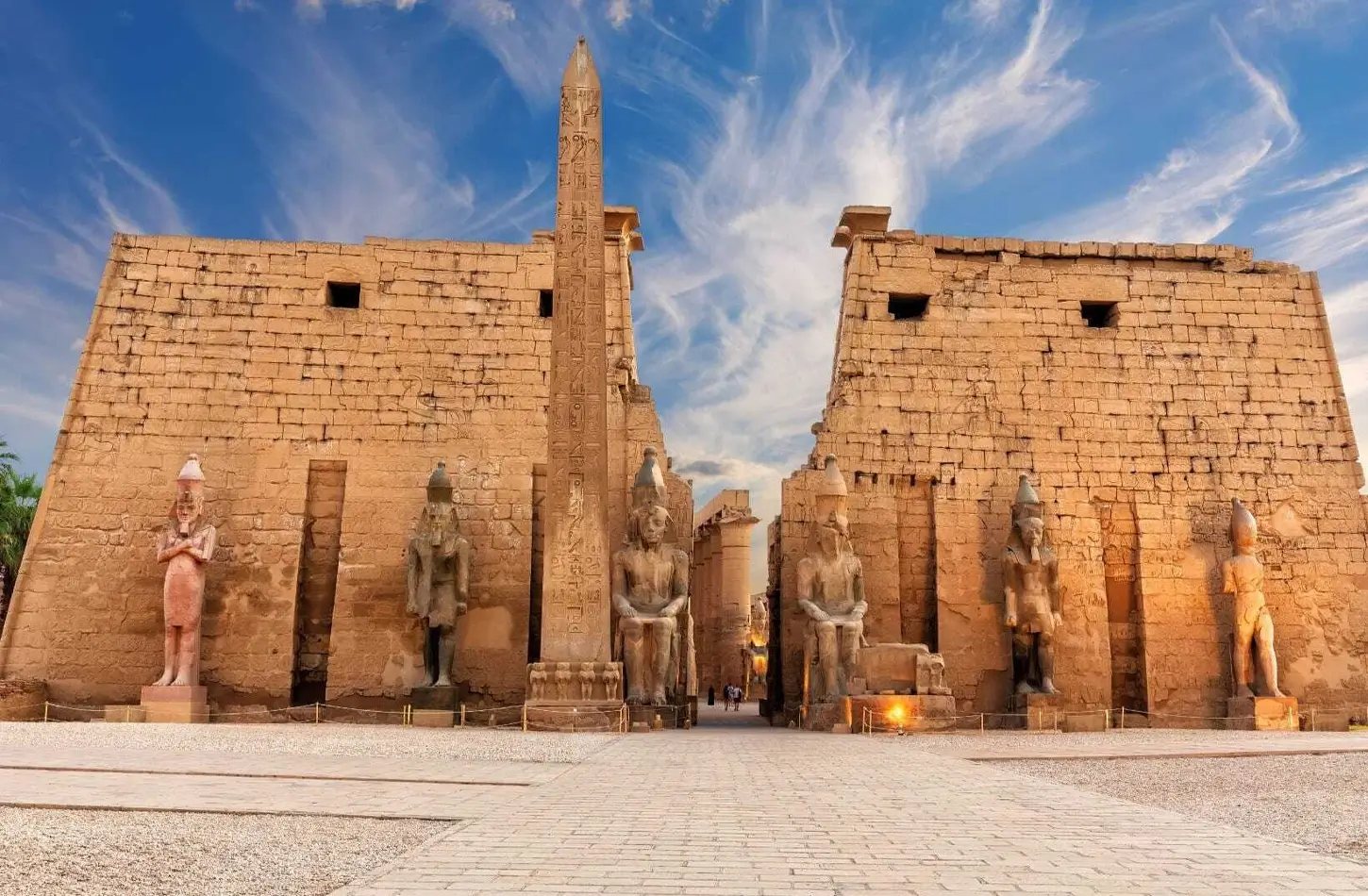
A short way south, the Luxor temple was joined to Karnak by an avenue of sphinxes nearly three kilometres long — now largely excavated, so you can see where the processions ran. The temple was later a Roman fort, then a church, then a mosque, which still stands inside the courtyard, its door opening several metres above the ancient floor level because the sand had risen that far before anyone dug it out.
Across the river, the Valley of the Kings holds sixty-three tombs. Not all are open on any given day — the rotation protects the paint — but the ones that are open are the reason the colour on a three-thousand-year-old ceiling still reads as blue. Nearby, Hatshepsut built her mortuary temple into the cliff at Deir el-Bahari in three terraces, a building so modern in line that it looks misplaced by millennia.
We meet you in Luxor, tour the West Bank with your Egyptologist in the cool of the morning, and board the Nile Spirit at Esna in the early afternoon — the crowds behind you, the river ahead.